Discover
Recognize the issue or opportunity using authorized observations and available evidence.

METHODOLOGY / NINE STAGES
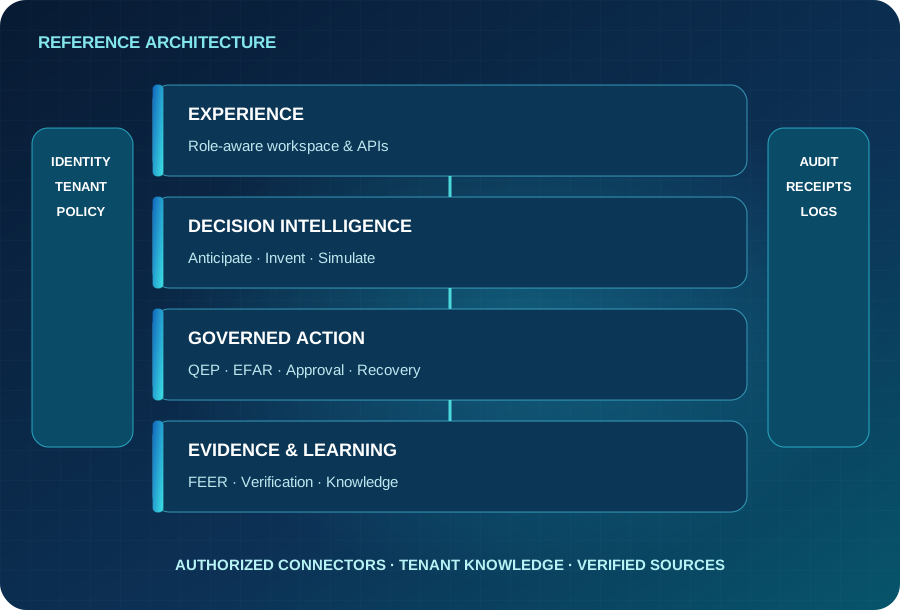
The QEP methodology provides a structured decision lifecycle, from understanding the context and evaluating consequences to governed execution, independent verification and evidence-based improvement.
THE NINE-STAGE QEP LIFECYCLE
The methodology prevents recommendation, authorization, execution and verification from collapsing into one unchecked AI response.
Recognize the issue or opportunity using authorized observations and available evidence.
Evaluate context, constraints, materiality, obligations and the need for action.
Preserve prior decisions, evidence, rationale, dependencies and missing obligations.
Explore downstream consequences and compare uncertain alternative paths.
Compose candidate responses or options appropriate to the situation, without silently granting authority.
Enforce security, evidence requirements, separation of duties and execution boundaries.
Obtain current authorization, dispatch controlled work and track execution or recovery.
Independently read back real-world results against expected outcomes and retain the evidence.
Use validated outcomes and material changes to support targeted reassessment and authorized improvement.
THE ESSENTIAL DISTINCTION
A task may finish while the underlying problem persists. The Ceryvra architecture is intended to preserve expected outcomes and independently check whether they actually occurred.
THE CONVERSATION STARTS HERE
Explore how a governed decision lifecycle could bring more clarity to your organization.